A Positive Return on Investment for Education Happens When________________.
Introduction
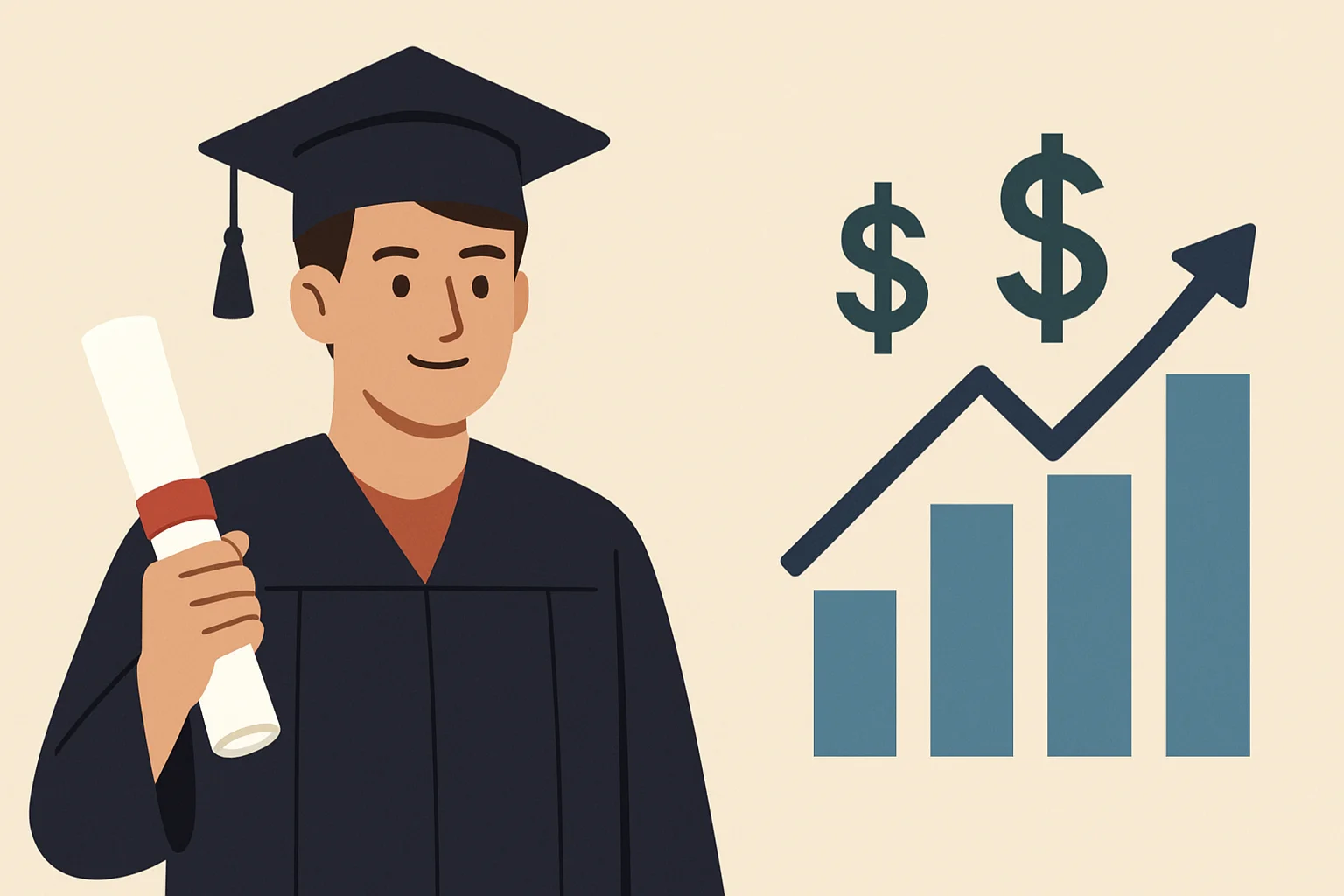
Education is one of the most valuable investments a person can make, but like any investment, it must deliver measurable benefits over time. A positive return on investment for education happens when____. the financial and personal rewards gained exceed the total costs spent on earning that education.
This concept goes beyond tuition and fees. It includes opportunity costs, time, and long-term earning potential. Understanding when education pays off helps students, parents, and professionals make smarter financial and career decisions.
What Does Return on Investment in Education Mean?
In simple terms, Return on Investment (ROI) measures how much benefit you gain relative to what you spend.
For education:
ROI = (Lifetime Earnings Gain – Total Education Cost) ÷ Total Education Cost
When this value is positive, your education has provided financial value — meaning you’ve earned more over time than you paid for schooling, materials, and living expenses.
A positive ROI doesn’t just reflect income; it can also include better job stability, career advancement, and improved quality of life.
A Positive Return on Investment for Education Happens When____.
The phrase answers itself: it happens when your post-education earnings exceed the total cost of your education.
If a student spends $60,000 on college and gains an extra $100,000 in lifetime earnings because of that degree, the ROI is positive. But if total costs outweigh future benefits, the ROI becomes negative.
This simple equation forms the foundation for evaluating the true financial value of any educational program.
Beyond Money: Non-Financial Returns
Education delivers value that goes beyond financial metrics:
- Improved communication, critical thinking, and leadership skills
- Broader career flexibility and mobility
- Better decision-making and confidence
- Enhanced civic engagement and social contribution
- Long-term health and lifestyle benefits
While these outcomes can’t be precisely calculated, they contribute to a lifetime of personal and professional rewards.
Key Factors That Determine ROI in Education
Achieving a positive ROI depends on multiple interconnected factors. Let’s explore them step by step.
1. Choice of Major or Field
Certain fields offer higher earning potential than others. STEM (Science, Technology, Engineering, and Math), medicine, business, and computer science often yield higher lifetime earnings. Degrees in fields with lower pay scales, such as fine arts or general education, may take longer to deliver a positive ROI.
2. Cost of Institution
The more affordable your education, the faster your ROI becomes positive. Public universities or community colleges often offer excellent programs at lower costs compared to elite private institutions.
3. Time to Degree Completion
Finishing your studies on schedule reduces costs and allows you to start earning earlier. Delays, major changes, or extended study years decrease ROI.
4. Funding and Debt Load
Scholarships, grants, and part-time jobs reduce financial pressure. Student loans can be beneficial if managed wisely, but high-interest debt can destroy ROI.
5. Labor Market Demand
If your degree matches industries in demand, job opportunities will be plentiful and salaries higher — increasing your ROI.
6. Geographic Factors
Location affects both education costs and potential earnings. High-growth cities or tech hubs typically offer better salaries but may come with higher living expenses.
When ROI Turns Negative
Not every education investment guarantees financial success. Here are common reasons ROI becomes negative:
- Excessive student loan debt compared to income
- Choosing a low-paying field with limited growth
- Spending too many years completing a degree
- Graduating during an economic downturn
- Ignoring opportunity costs (income lost while studying)
To protect yourself, analyze potential earnings before enrolling and estimate how long it will take to recover your investment.
Real-World ROI Examples
- High ROI: Engineering, computer science, healthcare, and business degrees often generate strong returns — many graduates recover costs within 5–8 years.
- Moderate ROI: Education, social sciences, or liberal arts may require longer periods (10–15 years) to show positive results.
- Low ROI: Expensive private programs in low-demand fields can lead to minimal or even negative returns.
Studies across developed economies suggest that each additional year of education increases lifetime earnings by roughly 8–10% on average. That’s why most college graduates eventually achieve a positive ROI over time.
How to Increase the Chances of a Positive ROI
1. Choose Market-Relevant Majors
Select a program aligned with growing job markets such as technology, healthcare, business analytics, or renewable energy.
2. Control Education Costs
Opt for public universities, online learning options, or community college pathways to reduce tuition costs.
3. Graduate on Time
Avoid unnecessary delays or major changes that extend your study period and increase costs.
4. Minimize Debt
Pursue scholarships, grants, and assistantships before considering loans. Pay interest early when possible.
5. Build Real-World Experience
Internships, freelancing, and certifications boost employability and income immediately after graduation.
6. Keep Learning After Graduation
Continuous learning and upskilling — through workshops, micro-degrees, or online courses — increase career growth and raise your long-term ROI.
Frequently Asked Questions
Q1: What does “a positive return on investment for education happens when everfi” mean?
It’s a version of a financial education quiz question meaning: ROI is positive when your earnings are higher than the cost of education.
Q2: How can I calculate my own education ROI?
Subtract the total education cost (including loans and lost wages) from your expected lifetime earnings increase, then divide by total cost. A positive percentage means good ROI.
Q3: Is college always worth it?
Not necessarily. ROI depends on your major, career path, and debt. Some degrees offer quick payback; others take years or never yield financial profit.
Q4: Does a positive ROI only mean money?
No. It also includes career satisfaction, job stability, social respect, and personal development.
Q5: Can short-term courses or certifications give positive ROI?
Yes. Affordable, skill-based programs like coding bootcamps, nursing diplomas, or trade certifications often have faster payback periods than full degrees.
Conclusion
Ultimately, a positive return on investment for education happens when your total lifetime benefits — financial, professional, and personal — surpass your total costs.
Education should not be viewed as an expense but as a long-term growth investment. The key is to plan strategically: choose in-demand fields, manage your costs, graduate on time, and keep learning.
When approached wisely, education delivers not only a higher income but also a richer life — a true return on investment that lasts a lifetime.