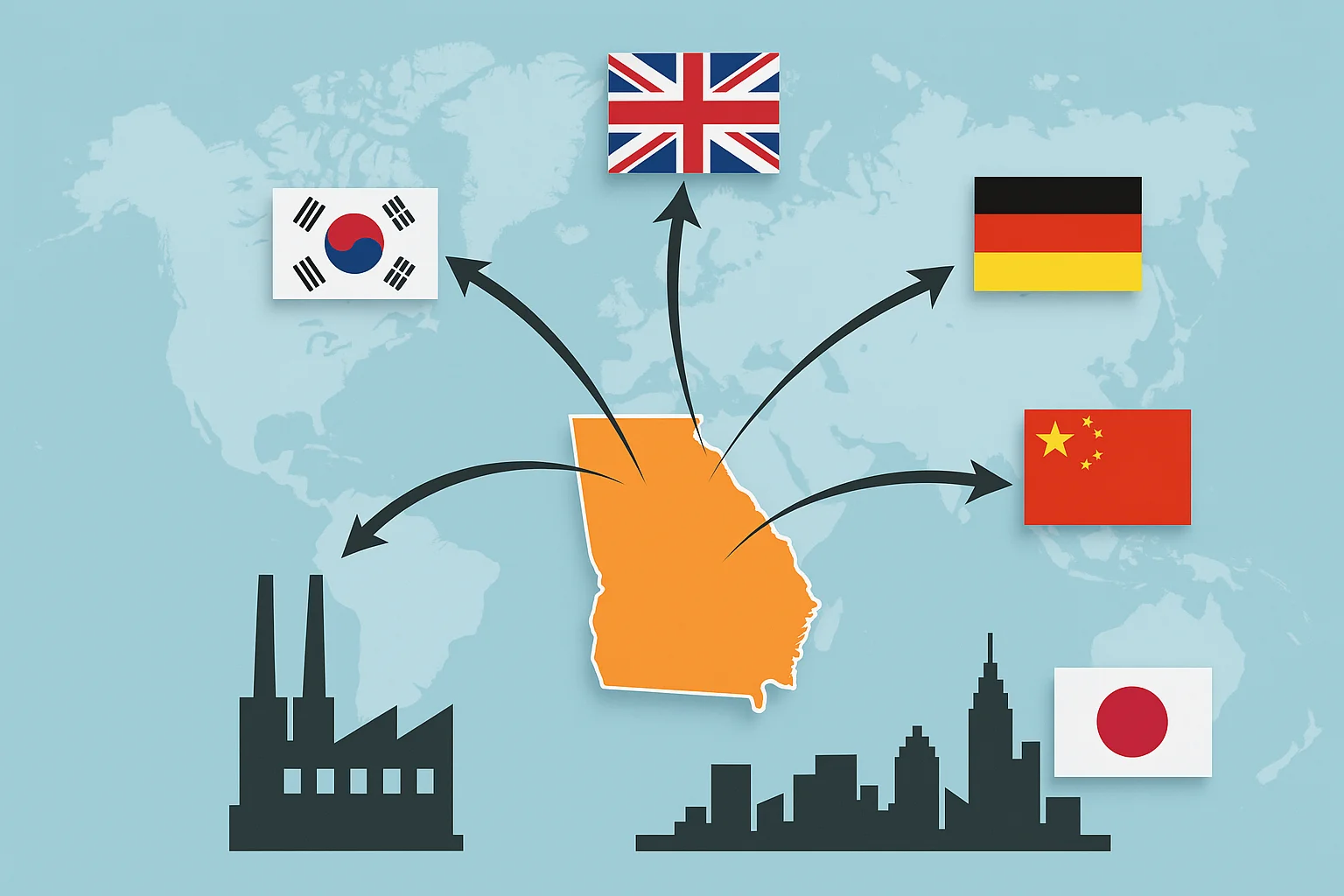
Which Countries Have Financial Investment and Manufacturing Centers in Georgia.
Georgia has evolved into a global business hub, attracting billions in foreign investment. Known for its welcoming business climate, skilled workforce, and strategic logistics network, the state has become a top destination for companies establishing manufacturing plants and financial operations. This article explores which countries have financial investment and manufacturing centers in Georgia., what industries they focus on, and why the state continues to attract global investors in 2025.
1. Why Global Companies Choose Georgia
Several key factors make Georgia one of the most business-friendly destinations in the United States:
- Strategic Location: With the Port of Savannah and Hartsfield-Jackson Atlanta International Airport, Georgia offers unmatched access to global markets.
- Business Incentives: Tax credits, grants, and workforce training programs make foreign investment easier and more profitable.
- Skilled Workforce: Over 120,000 students graduate from Georgia’s colleges and technical schools each year, supplying skilled labor for industry.
- Stable Regulatory Climate: Georgia consistently ranks among the top states for business due to its predictable legal and tax systems.
- Advanced Infrastructure: Highways, rail systems, and deep-water ports create a seamless supply chain for manufacturing and export.
These advantages form the foundation for Georgia’s growing portfolio of foreign-led industrial and financial operations.
See also Investment Calculator Dave Ramsey – Your Roadmap to Financial Freedom
2. Top Countries Investing in Georgia
Foreign companies from across the world have chosen Georgia as a strategic base. Here’s an overview of the countries leading financial and manufacturing investments:
| Country | Key Industries | Major Highlights |
| South Korea | Automotive, EV batteries, electronics | Hyundai’s $7.6 B EV Metaplant and SK Group’s battery projects have made South Korea the top investor. |
| Germany / EU | Renewable energy, industrial machinery | German firms like Qcells lead solar panel manufacturing, supporting green energy growth. |
| Japan | Automotive components, electronics | Japanese suppliers operate regional facilities supporting U.S. carmakers and tech firms. |
| China | Consumer goods, electronics, light manufacturing | Chinese firms have invested in industrial parks and logistics centers to access the U.S. market. |
| Turkey | Textiles, building materials, manufacturing | Turkish investments continue to grow in light industry and construction goods. |
| UK / Netherlands | Financial services, logistics, trade | European financial and logistics firms run regional offices and back-office centers in Georgia. |
3. South Korea: The Powerhouse of Georgia’s Investment Boom
South Korea leads all countries in both manufacturing and financial commitment to Georgia.
- Hyundai Motor Group built a massive electric vehicle plant in Ellabell, one of the largest foreign investments in U.S. history.
- SK Group operates advanced battery and materials plants, including high-tech component facilities.
- LG Energy Solutions collaborates on battery production and renewable projects.
- Georgia’s local universities and Korean community connections further strengthen economic ties.
These projects have created tens of thousands of jobs and cemented Georgia as the American hub for South Korean industry.
4. Germany and the European Connection
Germany and other EU nations play a major role in Georgia’s renewable-energy and clean-tech growth.
- Qcells, a German solar manufacturer, produces solar modules and panels in Georgia, supporting U.S. clean-energy goals.
- German and European firms are also active in machinery, logistics, and energy efficiency technologies.
- The EU–U.S. trade cooperation environment encourages more European companies to establish operations in Georgia.
Their focus on sustainability aligns perfectly with the state’s green manufacturing incentives.
5. Japan, China, and Turkey: Expanding Asian Footprints
Japan
Japanese companies have established small but advanced facilities producing automotive parts and precision equipment. They value Georgia’s logistics network and skilled workforce.
China
Chinese investors focus on consumer goods, electronics, and component manufacturing. Georgia’s cost-efficient logistics and access to the U.S. market make it a prime location for Chinese firms seeking U.S. expansion.
Turkey
Turkey maintains strong trade ties with Georgia through textile and building-material production. Turkish companies often collaborate with local partners in distribution and light industry.
6. Financial and Corporate Operations from the UK and Netherlands
While some nations invest in manufacturing, European investors such as the UK and Netherlands focus on financial and service sectors.
- International banking and investment firms use Atlanta as a regional base.
- Logistics, insurance, and trade finance companies operate back-office functions in Georgia.
- Proximity to major markets and a stable economic environment make the state ideal for these operations.
7. Industries Driving Foreign Investment in Georgia
Automotive and Electric Vehicles
Hyundai’s EV plant and its network of suppliers represent the largest single wave of foreign manufacturing investment in Georgia’s history. Battery plants, component manufacturers, and logistics providers have clustered around it.
Renewable Energy
German and South Korean investments dominate the solar and battery sectors. Georgia’s focus on clean-energy policy attracts investors from Europe and Asia alike.
Electronics and Semiconductors
Firms specializing in advanced electronics and semiconductor materials have opened new facilities to serve U.S. demand and diversify global supply chains.
Aerospace and Machinery
Georgia’s aerospace sector benefits from partnerships with international suppliers of parts, tools, and machinery, creating new opportunities for exports.
Financial and Business Services
Atlanta’s international airport and global connectivity have turned it into a regional financial hub, attracting foreign institutions and investment companies.
8. Geographic Hubs of Investment in Georgia
Savannah and Coastal Georgia
Manufacturers prefer this area for its proximity to ports and global shipping routes. The Savannah region hosts major logistics and export facilities.
Atlanta Metropolitan Area
Atlanta houses corporate headquarters, financial offices, and R&D centers of numerous multinational companies. It also provides access to skilled professionals and digital infrastructure.
Central and Rural Georgia
Counties across central and southern Georgia offer low costs and government-supported industrial parks for suppliers and smaller manufacturers.
9. Investment Scale and Economic Impact
- Georgia has attracted over $6.7 billion in foreign direct investment between 2021 and 2024.
- Over 3,000 international facilities now operate across the state, representing more than 60 different countries.
- The manufacturing sector accounts for 50%+ of all new business expansions.
- Foreign projects have created over 40,000 jobs statewide and continue to grow annually.
These figures demonstrate Georgia’s evolution into a cornerstone of international manufacturing and financial activity.
10. Key Advantages for Foreign Investors
- Access to U.S. and Global Markets – Georgia’s ports, airports, and highways link companies to global customers efficiently.
- Business-Friendly Environment – Low taxes, transparent regulation, and consistent policy attract long-term investors.
- Incentive Programs – Grants, co-financing, and training support under programs like Invest in Georgia and Workforce Georgia.
- Skilled Labor – Technical colleges and universities tailor programs to meet industry demand.
- Stable Political and Economic Climate – Predictability fosters investor confidence.
11. Challenges and Future Considerations
While the outlook remains positive, investors face some challenges:
- Increasing competition for skilled labor.
- Infrastructure expansion needs in port and rail corridors.
- Environmental and water-use regulations for large industrial projects.
- Adjustments to global supply-chain disruptions and U.S. trade policies.
Still, most companies consider these manageable compared to the strategic advantages Georgia offers.
12. FAQs
Q1: Which country has the biggest investment in Georgia?
South Korea, led by Hyundai and SK Group, holds the largest manufacturing investment footprint in Georgia.
Q2: Do European companies also invest in Georgia?
Yes, especially from Germany and the EU, focusing on renewable energy, machinery, and technology manufacturing.
Q3: What financial firms operate in Georgia?
Several British and Dutch companies manage regional finance, logistics, and back-office operations from Atlanta.
Q4: Are there opportunities for small or medium foreign businesses?
Yes, Georgia’s industrial parks and state programs encourage SMEs to set up component manufacturing or service offices.
Q5: What sectors will grow most in the future?
Electric vehicles, green energy, semiconductors, and advanced materials are expected to lead the next phase of expansion.
13. Conclusion
Georgia stands as a model for how a U.S. state can attract and sustain international investment. From South Korea’s massive automotive plants to Germany’s solar innovation and Europe’s financial services, which countries have financial investment and manufacturing centers in Georgia. is no longer just a question—it’s proof of Georgia’s global economic reach.
As global supply chains evolve, Georgia’s pro-business policies, workforce strength, and logistics power will continue to make it a preferred location for foreign investors well beyond 2025.